
When ADHD Meets Trauma: The Perfect Storm for Shame

Shame can turn everyday struggles into negative beliefs about ourselves. For people with ADHD, difficulties with focus, time management, emotions, or responsibilities may lead to repeated criticism and feelings of inadequacy.
When trauma is added, these feelings can become even stronger. ADHD and trauma may interact in ways that intensify emotional reactions, avoidance, self-criticism, and shame—creating a “perfect storm” that can make a person feel broken, even when they are simply coping with complex challenges.
Understanding ADHD, Trauma, and the Inner Critic
ADHD is a neurodevelopmental condition that can affect attention, impulse control, executive functioning, and emotional regulation, while trauma can shape how a person responds to stress, relationships, emotions, and safety. Because symptoms such as difficulty concentrating, forgetfulness, irritability, restlessness, and emotional reactivity can occur with either—or both—it’s important to look beyond symptoms and understand the whole person and their experiences.
For people with ADHD, years of being called careless, lazy, or unreliable can turn struggles into shame and negative beliefs about themselves. Trauma can intensify this inner critic, making small mistakes or misunderstandings feel overwhelming by triggering fear, rejection, or memories of past criticism. Together, ADHD and trauma can create a cycle where everyday challenges reinforce shame and the belief that something is wrong with them.
The Cycle of Shame, Rejection, and Avoidance
ADHD and trauma can create a cycle of difficulty → mistakes → criticism → shame → avoidance → more difficulty.
Struggles with tasks may lead to procrastination, anxiety, or missed deadlines, while criticism can reinforce beliefs like, “I always mess things up.”
Perceived rejection may also trigger intense embarrassment, anxiety, anger, or withdrawal, especially when trauma brings up past experiences.
Shame can then lead to avoidance—putting things off, withdrawing, or avoiding help to escape the fear of failure or judgment. While avoidance may feel protective in the moment, it can make everyday challenges and relationships harder over time. Breaking the cycle starts with understanding the underlying challenges rather than simply being told to “try harder.”
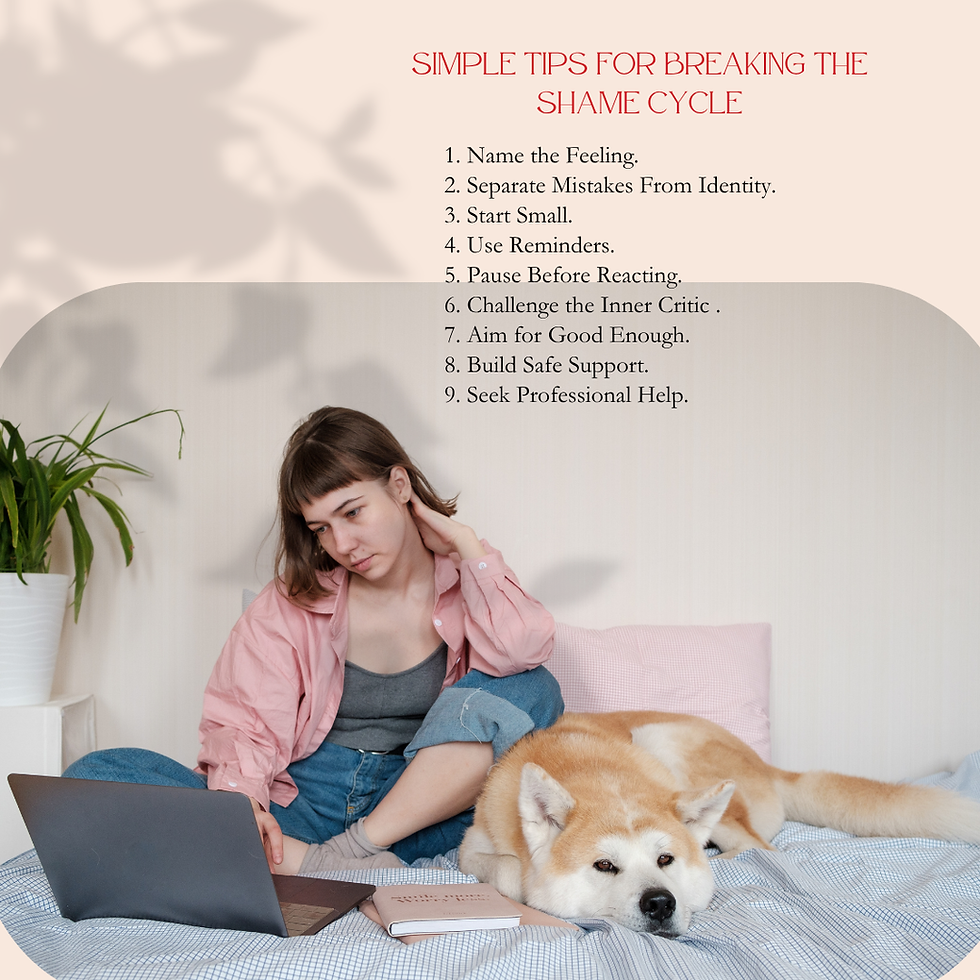
Simple Tips for Breaking the Shame Cycle
Small, consistent steps can help reduce shame and self-criticism:
Name the Feeling — “I’m feeling ashamed right now.”
Separate Mistakes From Identity — “I made a mistake; I’m not a failure.”
Start Small — Focus on the smallest next step.
Use Reminders — Try calendars, alarms, lists, or visual cues.
Pause Before Reacting — Stop, breathe, notice, then respond.
Challenge the Inner Critic — Ask, “Is this really true?” and “What would I say to someone I care about?”
Aim for Good Enough — Progress matters more than perfection.
Build Safe Support — Choose people who offer understanding, respect, and encouragement.
Seek Professional Help — Consider support when shame, trauma, ADHD, or anxiety affects daily life.
Moving From Shame to Self-Understanding
Healing means replacing self-blame with understanding. Instead of asking, “What’s wrong with me?” ask, “What’s making this difficult, and what support do I need?”
Self-compassion and accountability can coexist—you can learn from mistakes without defining yourself by them. ADHD and trauma may influence your challenges and responses, but they do not define who you are. With the right support, you can build a healthier, more compassionate view of yourself.
You are not your mistakes, symptoms, or past experiences.
Final Thoughts
When ADHD and trauma overlap, shame can feel overwhelming—but it doesn’t mean it is deserved. Understanding the connection can be the first step toward change.
Instead of asking, “Why can’t I just be normal?” try asking, “What do I need now?”
With compassion, understanding, and the right support, a different future is possible. If shame, ADHD, or trauma symptoms are affecting daily life, consider seeking help from a qualified mental-health professional.
Join us on Social Media: Follow us for more insights and updates.
And Remember
"I want to make a difference in people’s lives!
I work to ensure everyone has an
equal opportunity to succeed."
-- Gretchen Pound, PhD


